Practice portal › Ray Optics and Optical Instruments › Refraction and Total Internal Reflection
Asked in RS Academy GUJCET booklet · Snell's law, slabs and apparent depth
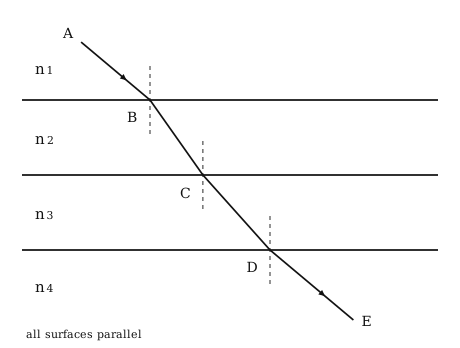
Given: four media with parallel boundaries; AB enters at the top and DE leaves at the bottom, parallel to AB.
Idea: write Snell's law at each boundary in turn and see what survives.
n₁ sin θ₁ = n₂ sin θ₂ at the first surface, n₂ sin θ₂ = n₃ sin θ₃ at the second, and n₃ sin θ₃ = n₄ sin θ₄ at the third.
Because the surfaces are parallel, the angle a ray makes with the normal is the same where it leaves a layer as where it entered, so the three equations chain into n₁ sin θ₁ = n₄ sin θ₄.
DE parallel to AB means θ₄ = θ₁, so sin θ₄ = sin θ₁ and therefore n₄ = n₁.
The middle indices drop out completely: a stack of parallel slabs shifts a ray sideways, but only the first and last media decide the direction it ends up travelling in.
So the condition is n₄ = n₁.
Reading this solution needs no sign-in. You only sign in to practise against the clock and keep your progress.
Practise this with a timer