Practice portal › Ray Optics and Optical Instruments › Refraction through a Prism
Asked in RS Academy GUJCET booklet · Deviation and minimum deviation
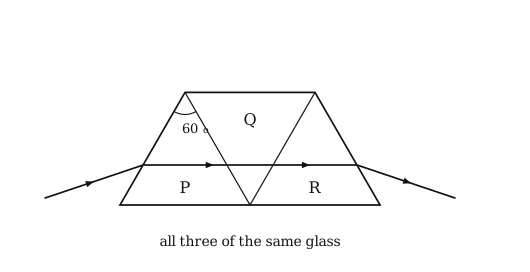
Given: a ray already at minimum deviation through the equilateral prism P; two more prisms Q and R of the same glass and the same size are pushed against it as in the figure.
Idea: the joins between P, Q and R are boundaries between identical glass. There is no step in refractive index there, so no refraction happens at them — optically the three prisms are one single piece of glass.
What that piece does to the ray is decided by its two outer faces alone: where the light goes in and where it comes out.
In this arrangement the prisms alternate, upright and inverted, so the entrance face and the exit face are still inclined at 60° to each other, exactly as P's two faces were.
Same refracting angle, same glass, same angle of incidence, so the deviation is unchanged.
The ray experiences the same deviation as that due to P — and it is still the minimum deviation, since the path through the block is still symmetric.
Reading this solution needs no sign-in. You only sign in to practise against the clock and keep your progress.
Practise this with a timer