Practice portal › Electric Potential and Capacitance › Capacitor Circuits and Energy
Asked in GUJCET 2013 · Capacitor networks
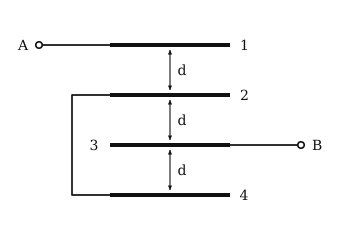
Given: four plates 1–4, each of area A, with adjacent gaps d. Plate 1 is joined to A, plate 3 to B, and plates 2 and 4 are joined to each other.
Idea: each gap between facing plates is a capacitor C = (ε₀A)/d; plates joined by a wire are one node.
Gap 1–2 lies between A and the node formed by plates 2 and 4.
Gaps 2–3 and 3–4 each lie between plate 3 (that is, B) and that same node, so they are in parallel: 2C.
So C is in series with 2C: C_AB = (C×2C)/(C+2C) = (2C)/3.
C_AB = (2ε₀A)/(3d).
Reading this solution needs no sign-in. You only sign in to practise against the clock and keep your progress.
Practise this with a timer