Practice portal › Laws of Motion › Friction: Blocks, Belts and Inclines
Asked in JEE Main 30th June 1st Shift 2022 · Friction on belts and accelerating surfaces
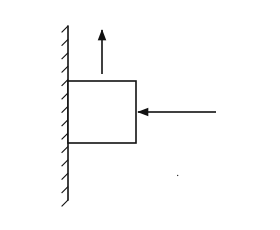
Idea: the horizontal push supplies the normal force, and when F tries to lift the block, friction acts downward, joining the weight in holding it.
Normal force: the horizontal push is the only horizontal force, so
N=50 N.
Largest friction available:
fₘₐₓ=μ N=0.5×50=25 N.
Vertical balance at the point of slipping upward:
F=mg+fₘₐₓ=2×10+25=20+25
Fₘₐₓ=45 N.
Note the block is not in danger of falling: holding it up needs only 20 N of friction and 25 N is available, so with no F at all it stays put.
Reading this solution needs no sign-in. You only sign in to practise against the clock and keep your progress.
Practise this with a timer