Practice portal › Electric Potential and Capacitance › Capacitor Circuits and Energy
Asked in JEE Main Online 2018 · Redistribution of charge
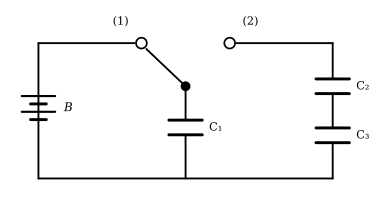
Initial charge: Q=C₁V=1×60=60 μC, and once the battery is disconnected this is all the charge in the circuit.
C₂ and C₃ are in series: C₂₃=(3×6)/(3+6)=2 μ F.
Closing switch (2) puts C₂₃ in parallel with C₁, so the total capacitance is 1+2=3 μ F and the common voltage is V'=(60)/3=20 V.
Charge in the series branch: q=C₂₃V'=2×20=40 μC, and C₁ keeps 1×20=20 μC.
Being in series, C₂ and C₃ each carry that same 40 μC (at 13.3 V and 6.7 V respectively).
Reading this solution needs no sign-in. You only sign in to practise against the clock and keep your progress.
Practise this with a timer